
Butyl acetate PurReagent 99.5%
99.5%
Synonym: Acetic Acid Butyl Ester
Linear Formula:
C6H12O2
Molecular Weight: 116.16g/mol
CAS Number: 123-86-4
Properties
| Vapour pressure | 15 mmHg ( 25 ℃) |
| Water Solubility | Slightly soluble |
| Autoignition temp. | 790 ℉ |
| Explosion limit | 7.6 % |
| Assay Purity | 0.995 |
| Refractive index | n20/D 1.394 (lit.) |
| B pt. | 124-126 ℃ (lit.) |
| M pt. | 78 ℃(lit.) |
| Density | 0.88 g/mL at 25 ℃ (lit.) |
Safety Information
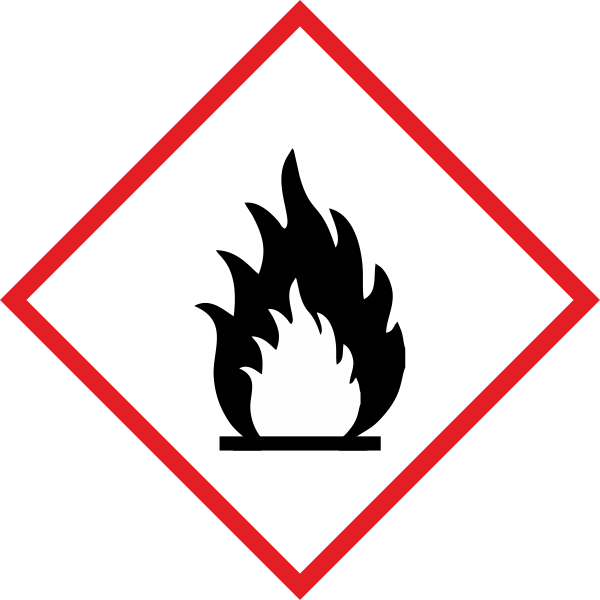
| Hazard Statement(s) | H226 - H336 |
| Precautionary Statement | P210 - P233 - P240 - P241 - P242 - P243 |
| Symbol |

|
| Signal word | Warning |
| HS Code | 2915330000 |
| Flash point | 27℃ |
| Storage Temp. | Store at Room Temperature. |
| Storage Class | 3 |
| Packaging | Glass Bottle |
| UN Number | 1123 |
Description
Recommended products
Cadmium Carbonate 97%
Application
Butyl acetate has been used for the preparation of testicular tissue and cell cultures for immunohistochemical (IHC) and immunofluorescent (IF) staining. Butyl acetate may be used to abstract aluminium-hydroxyquinolate complex from soil extracts for determining aluminium spectrophotometrically and by fluorimetry.[5] It can also be used to abstract traces of gold from ores which is then determined by flame atomic absorption spectrometry.
Purpose
For R&D use onlynot for drug household or other uses.
General Description
Butyl acetate (BAn-butyl acetate) is an ester commonly used as an organic solvent in cosmetic and pharmaceutical industries and as a flavoring agent in food industry.One of the methods reported for its synthesis is the esterification reaction between acetic acid and butanol catalyzed by expandable graphite (EG).[2]The decomposition of butyl acetate by photocatalysis in gas phase has been studied using TiO2 PtTiO2and WO3TiO2catalysts.
Documents
| SDS | |
| COA | |
| Specification | |
| Bulk quote order form |