
Valeric Acid 99%
99%
Properties
| Vapour pressure | 0.15 mmHg ( 20 ℃) |
| Autoignition temp. | 707 ℉ |
| Explosion limit | 7.6 % |
| Assay Purity | >=99% |
| Refractive index | n20/D 1.408 (lit.) |
| B pt. | 185 ℃ (lit.) |
| M pt. | -18℃ |
| Density | 0.939 g/mL at 25 ℃ (lit.) |
Safety Information
| Hazard Statement(s) | H314 - H412 |
| Precautionary Statement | P273 - P280 - P301 + P330 + P331 - P303 + P361 + P353 - P304 + P340 + P310 - P305 + P351 + P338 |
| Symbol |
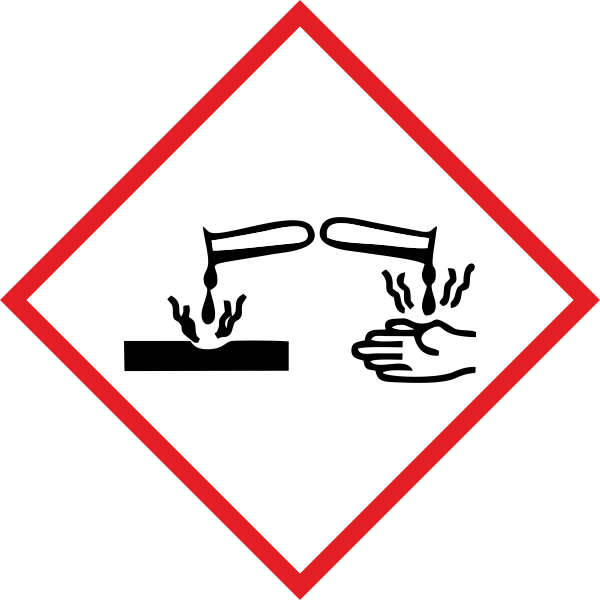
|
| Signal word | Danger |
| HS Code | 2915600000 |
| Flash point | 96℃ |
| Storage Temp. | Store at Room Temperature. |
| Storage Class | 8 |
| Packaging | Glass Bottle |
| UN Number | 3265 |
Description
Application
Sex attractant of the sugar beet wirewormLimonius californicus.
Purpose
For R&D use onlynot for drug household or other uses.
General Description
Valeric acid or pentanoic acid is a straight-chain alkyl carboxylic acid with the chemical formula C5H10O2. Like other low-molecular-weight carboxylic acids it has a very unpleasant odor. It is found naturally in the perennial flowering plant valerian (Valeriana officinalis) from which it gets its name. Its primary use is in the synthesis of its esters. Volatile esters of valeric acid tend to have pleasant odors and are used in perfumes and cosmetics. Ethyl valerate and pentyl valerate are used as food additives because of their fruity flavors.
Documents
| SDS | |
| COA | |
| Specification | |
| Bulk quote order form |