Pyridine PurSolv Plus for GC and non-aqueous titrations, >99.8%
PurSolv Plus
Properties
| Vapour pressure | 20 mmHg (25°C) |
| Water Solubility | Miscible |
| Autoignition temp. | 899°F |
| Explosion limit | 12.40% |
| Assay Purity | >99.8% |
| Refractive index | n20/D 1.509 (lit.) |
| B pt. | 115°C |
| M pt. | -42°C |
| Density | 0.978 g/mL at 25°C (lit.) |
| Form | Liquid |
Safety Information
| Hazard Statement(s) | H225,H302 + H312 + H332,H315,H319 |
| Precautionary Statement | P210 - P280 - P301 + P312 - P303 + P361 + P353 - P304 + P340 + P312 - P305 + P351 + P338 |
| GHS Pictogram |
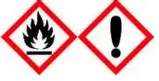
|
| Signal word | Danger |
| HS Code | 29333100 |
| Flash point | 68°F |
| Storage Temp. | Room Temperature |
| Storage Class | 3 - Flammable liquids |
| UN Number | 1282 |
Description
Application
It serves as a versatile polar aprotic solvent and key chemical intermediate in industries for pharmaceuticals agrochemicals dyes resins and as a denaturant or antiseptic component.
Purpose
Its primary purpose is to act as a raw material and reaction medium in synthesis processes requiring basicity solubility and acid resistance such as vitamin production and pesticide manufacturing.
General Description
Pyridine is a colorless to yellow water-miscible flammable liquid with the formula C5H5N featuring a six-membered heterocyclic aromatic ring containing one nitrogen atom and a strong fish-like odor.
Documents
| SDS | |
| COA | |
| Specification | |
| Bulk quote order form | |
| Sample COA |
