
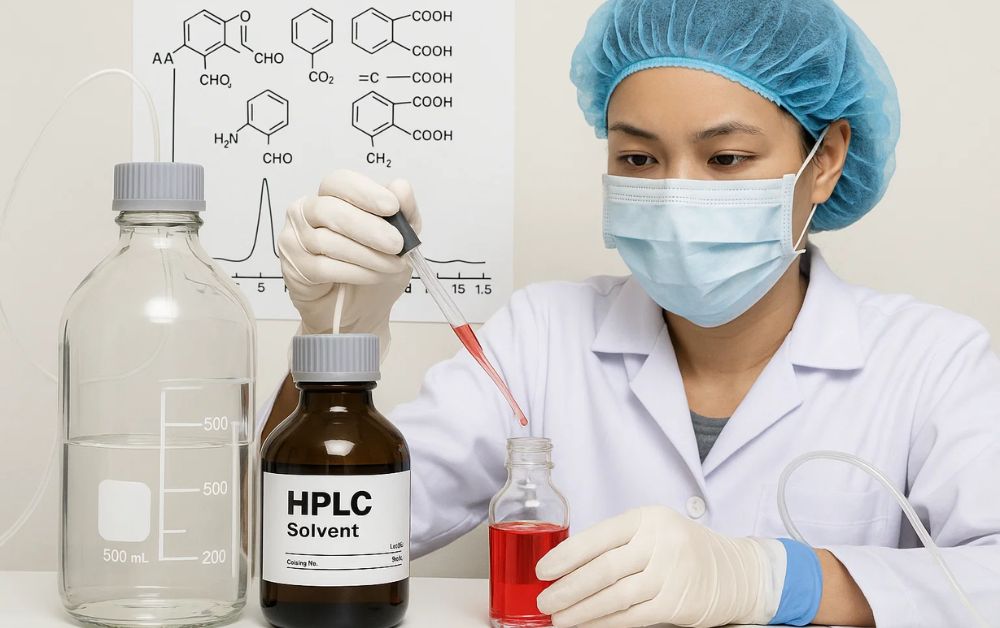
Mastering HPLC Solvent Selection: Key Criteria for High-Precision Results
Success in any chromatographic analysis largely depends on the choice of HPLC solvents. Whether you are working in pharmaceutical quality control, environmental testing, or biochemical research, the mobile phase you select will make all the difference in your results. Proper solvent selection can give you sharp peaks, reproducibility of runs, accuracy in quantification, and extended column life. In this blog, we present some of the key criteria for selecting the appropriate HPLC solvents and why the use of reliable suppliers like PureSynth from Germany, a global provider, can indeed make a difference.
Why HPLC Solvent Selection Matters
The solvent(s), or the mixture of solvents, utilized in high?performance liquid chromatography, are intended to carry the analytes through the column of the stationary phase. Its properties affect:
- Resolution: The degree of separation between different compounds.
- Retention time: the time taken for compounds to elute, relating to throughput and separation.
- Peak shape and sensitivity: are crucial for accurate quantitation and detection.
- Reproducibility: Results should be replicable across runs and batches.
- Instrument & column life: Contaminated or incompatible solvents can cause deterioration of the phase or block the system.
Therefore, the art of selecting solvents is not just a question of solvent selection per se, but fine-tuning of the mobile phase to match your analytes, detection methodology, and chromatographic goals.
Key Factors in Selecting HPLC Solvents
When selecting HPLC solvents, consider the following factors carefully:
Polarity & Elution Strength
- The polarity of the solvent or solvent mixture should correspond to the nature of the analyte and the stationary phase. In RP?HPLC, the mobile phase generally is a mixture of a polar solvent - often water or aqueous buffer - and a moderately polar organic modifier, such as methanol or acetonitrile.
- The organic modifier boosts the elution strength, helping elute analytes efficiently. Common organic modifiers include acetonitrile, methanol, tetrahydrofuran (THF), isopropanol, etc.
- In normal-phase HPLC, which is less common these days, the mobile phase consists of non-polar (lipophilic) solvents that interact with a polar stationary phase; typical examples include hexane, chloroform, ethyl acetate, etc.
Miscibility & Compatibility
- When combining solvents, make sure that they are miscible. Immiscible solvents may undergo phase separation, which could damage the column or produce results that aren't reliable.
- The mixed solvents should be compatible with column packing material and the detection method; for example, insoluble salts or incompatible additives may precipitate or react adversely.
Purity & UV Transparency
- Solvents should be of high purity, preferably "HPLC grade" or better. Lower-grade-e.g., reagent-grade solvents may contain impurities that give rise to baseline noise, ghost peaks, or seriously compromise quantitation.
- For UV detection, which is very common in HPLC, the solvent's UV?cutoff wavelength should be lower than the analyte's detection wavelength. Otherwise, the solvent itself may absorb light and obscure the analyte signal.
Viscosity & Backpressure
- Lower-viscosity solvents flow more easily through the column, reducing backpressure and wear on the pump. High-viscosity solvents may cause high backpressure, reduce column lifetime, or even damage the instrument.
- The volatility of the solvent should also be considered. Very volatile solvents may evaporate, change in composition with time, or form bubbles — all leading to inconsistent results or baseline noise.
Chemical Inertness & Stability
- The solvent must be chemically inert regarding the analyte, all materials of the stationary phases, and additives. Reactive solvents can destroy the sample or damage the column.
- If additives like buffers or ion?pairing agents are utilized, make sure these are soluble in the final solvent mixture and can remain stable over the period of analysis.
Cost, Availability & Regulatory Considerations
-
High?purity solvents are more expensive — but in research, pharmaceutical, or regulatory labs, the trade-off with data quality and reproducibility often makes it worth it.
- For regulated analyses, such as pharmaceutical QC, the solvent may need to be of a certain quality according to a pharmacopeia, USP, EP, etc., and traceable, with documentation.
Common Solvents & Typical Solvent Systems
Some of the most common HPLC solvents or components of the mobile phase include:
- Water - usually as the aqueous component in RP?HPLC.
- Acetonitrile (ACN) — widely used organic modifier, preferred due to low UV absorbance, low viscosity, and good elution strength.
- Methanol (MeOH) - a flexible solvent; may be preferred for some analytes or when budgetary concerns are emphasized, although viscosity is generally higher than that of acetonitrile, which can increase backpressure.
- Tetrahydrofuran (THF), isopropanol (2-propanol), or other organic solvents — depending on properties of analyte, elution strength needed, or column compatibility.
A typical reversed-phase mobile phase might be a blend of water (or aqueous buffer) with acetonitrile or methanol; the ratio may be adjusted depending on desired retention, resolution, or gradient profile.
In the normal phase, nowadays less frequently used, non-polar solvents are employed, such as hexane, chloroform, or ethyl acetate.
Practical Steps & Best Practices
Whenever you are working on setting up an HPLC method, best practices in solvent selection and the preparation of mobile phases involve:
- Use high-purity (HPLC?grade) solvents to minimize baseline noise, ghost peaks, and contamination.
- Ensure miscibility — mix only solvents that are completely miscible; avoid creating a phase separation.
- Filter and degas the mobile phase — use appropriate filtration (0.22 µm or 0.45 µm) and degassing (ultrasonication, vacuum, or helium sparging) to remove particles and dissolved gases that may produce bubbles or noise.
- Match solvent choice to detection method — for UV detection, ensure solvent has low UV absorbance (low UV-cutoff).
- Adjust pH or add buffers/additives as needed - if the analytes are ionizable or sensitive to pH, pick appropriate buffer systems; but ensure compatibility with organic solvents and column.
- Monitor viscosity and back pressure- If backpressure is high, consider using lower-viscosity solvents or adjusting the composition of the solvent.
- Store and manipulate solvents with care - volatile solvents should be handled in stoppered vessels; mobile phases must be labelled with the date of preparation, avoiding long-term storage.
Why Working with a Trusted Supplier Matters: Enter PureSynth
The selection of a proper supplier for your HPLC solvents is no different from the selection of the appropriate solvent itself. That's where PureSynth makes a difference. PureSynth, a Germany-based global solution provider, offers a comprehensive portfolio of laboratory-grade chemicals: reagents, solvents, building blocks, catalysts, and many more.
- The solvents they provide are really subjected to serious quality control, batch-to-batch consistency, and follow international standards like ISO, GMP, and REACH-quality, which is crucial for laboratories requiring traceability and reproducibility.
- PureSynth's offering of more than 80,000 products, including high?purity solvents, provides researchers with flexibility in choosing a grade to meet their specific analysis requirements (e.g., "puriss for synthesis," "puriss AR," etc.).
- Sourcing solvent supplies from a reputed supplier will help, in particular, sensitive or regulatory analyses: pharma, biotech, and environmental, to assure data integrity and compliance.
If you are interested in avoiding baseline noise, ghost peaks, or column deterioration, which are some of the pitfalls of HPLC analysis, buying your HPLC solvents from a reputable dealer like PureSynth will be a prudent professional decision.
Common Pitfalls & How to Avoid Them
Even with the right solvents, poor method development or careless handling can ruin your chromatograms. Some common pitfalls associated with include:
- Using low-grade or impure solvents: these result in high background noise, ghost peaks, and inconsistent retention times.
- Mixing immiscible solvents or those incompatible with each other it causes phase separation, precipitation, or column damage.
- Neglecting viscosity/backpressure issues, hence putting stress on the pump or column wear.
- Neglecting filtration and degassing, linear solid particles, bubbles, baseline drift, and poor reproducibility.
- Poor column equilibration after mobile-phase change or prior to the start of analysis leads to retention shifts, unstable baselines, or carry-over.
Avoiding these problems requires attention to detail, methodical preparation, and consistency in both solvent selection and in the routine system maintenance.
Conclusion
Mastering HPLC solvent selection is fundamental to achieving high?precision, reproducible chromatographic results. From solvent polarity, miscibility, purity, viscosity, to compatibility with the detection method and column — every variable plays a critical role. When you pair careful selection with high-quality procurement from a reliable supplier, like PureSynth, you significantly enhance the reliability and longevity of your HPLC system. By continually sourcing your HPLC solvents from certified, high-purity suppliers and by following best practices for their preparation and handling, you can set your lab up for robust performance, cleaner chromatograms, and dependable data time and again.
Latest Post
- How to handle Lab reagents after their Expiration date
- Challenges of scaling up production from grams to kilos
- Process Development and Quality by Design (QbD)
- Defend Against Nitrosamine Impurities with Nitrite-Free LC-MS Solvents
- Exploring the Role of Palladium and Platinum Catalysts in Heterocyclic Compound Synthesis
- Challenges and Solutions in Modern Reaction Engineering
- Importance of Chiral Separation and Resolution in Drug Synthesis
- The Role of Cell Culture Media in Erythropoietin Upstream Processing
- How Material Innovation Drives Down the Cost of Renewable Energy
- The Role of Regulatory Affairs in International Market Access
- The Role of Dispersion Media Viscosity in Particle Characterization
- Choosing the Right Host Cell Line for Erythropoietin Upstream Processing
- How Organic Synthesis Shortens Drug Development Time
- Key Factors for Successful Scale-Up in Organic Synthesis
- How Academia and Industry Work Together to Advance Chemical Synthesis Innovations
- Quality Control Standards Every Fine Chemical Supplier Must Follow
- The Role of Certification in Choosing Impurity Reference Standards Suppliers
- Improving Safety and Efficiency in Custom Synthesis Using Flow Techniques
- How PureSynth Uses Flow Chemistry for Efficient Scale-Up
- Key Regulatory Bodies Governing Fine Chemicals Around the World
- Fine Chemical Synthesis at Scale: Challenges and How to Tackle Them
- Why Leading Industries Depend on Custom Chemical Synthesis
- Key Metrics for Monitoring Quality in Chemical Synthesis
- Unlocking Innovation in Chemical Manufacturing Through Collaboration
- Enhancing Efficiency and Flexibility with On-Demand Chemical Synthesis
- Overcoming Global Sourcing Challenges with PureSynth
- Building Long-Term Chemical Supply Partnerships with PureSynth
- PureSynth: Your Trusted Partner in Fine Chemical Supply
- Integrating Green Chemistry with Research Chemicals
- How to Handle Lab Chemicals Safely: From PPE to Spill Response
- The Importance of Analytical Standards in Modern Lab Work
- What Exactly Is a Reagent—and Why Does It Matter?
- From the Lab to the Marketplace: Quality & Compliance of Research Chemicals
- Streamlining Reagent Management: Inventory Control Best Practices
- Analytical Standards in Quality Control: Ensuring Lab Reliability
- Certified Analytical Reagents: The Backbone of Trustworthy Research
- Going Green: Sustainable Alternatives for Traditional Lab Reagents
- Choosing the Right Analytical Standards: Purity, Stability & Certification
- Mastering HPLC Solvent Selection: Key Criteria for High-Precision Results
- LCMS-Grade vs. HPLC-Grade Solvents: Why Purity Matters
- How a Supplier Ensures Lab Reagents Meet Purity and Grade Standards
- How Analytical Standards Support Method Validation & Calibration
- Advanced HPLC: Optimizing Solvent Composition for Gradient Elution Efficiency
- Common LCMS Solvents & Modifiers: A Guide to Mobile Phase Composition
- Pyridine Derivatives Suppliers | A Comprehensive Guide by PureSynth Research Chemicals
- PureSynth Research Chemicals: Trusted Pyridine Derivatives Supplier for Pharmaceutical and Agrochemical Industries
- HPLC Solvents: High-Purity Solutions from PureSynth Research Chemicals
- Why PureSynth Research Chemicals Is a Trusted Supplier for HPLC-Grade Solvents?
- Optimizing LCMS Performance: PureSynth Research Chemicals’ Guide to High-Quality Solvents
- Reagent-Quality Matters | PureSynth Research Chemicals' Approach to Laboratory Chemicals Supply